
What Causes Bad Customer Service Experience

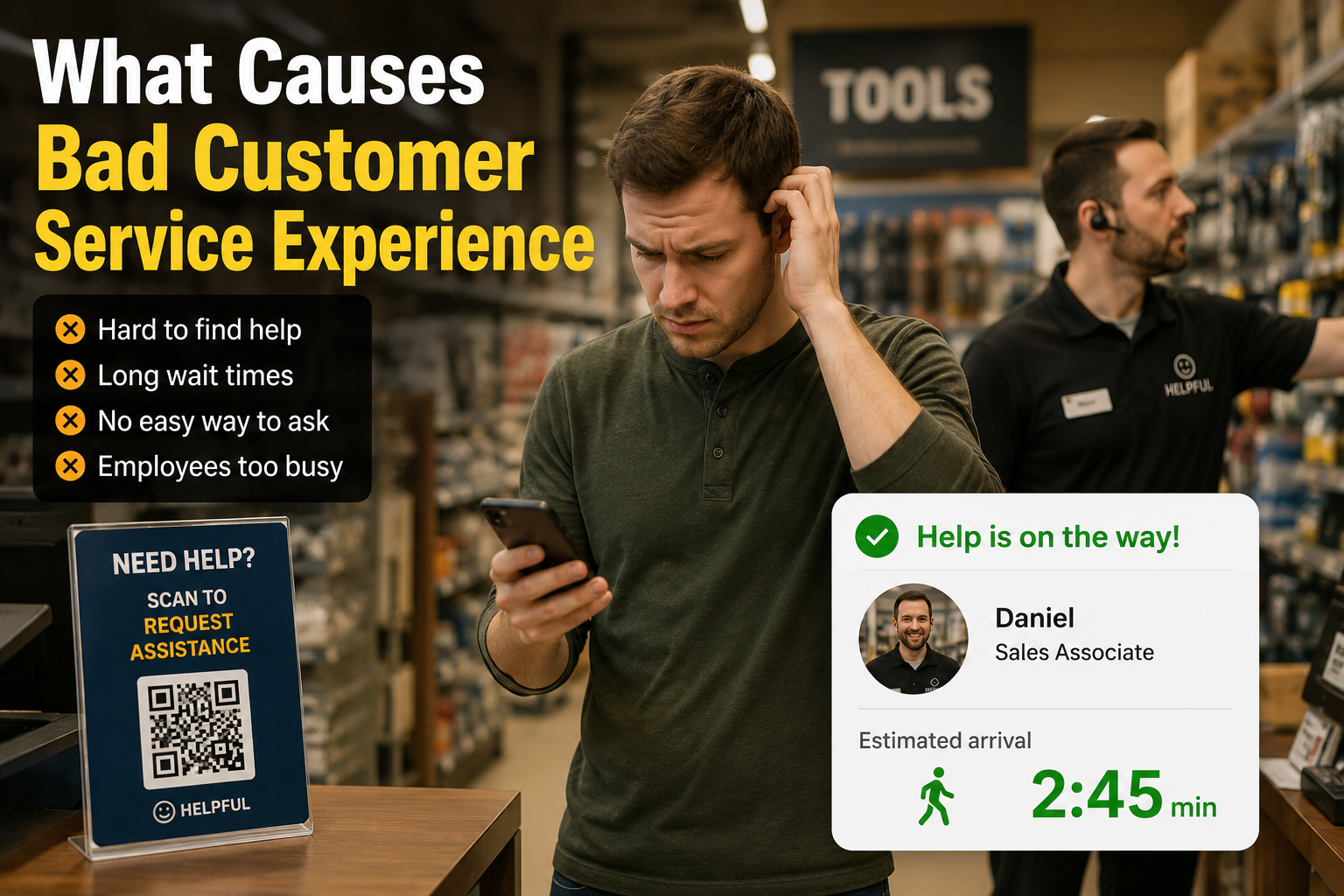
How to Identify What Causes Bad Customer Service Experience and Fix It Fast
Most businesses assume bad customer service happens because employees are not trying hard enough.
That is rarely the real issue.
In most retail, hospitality, and service environments, bad customer service experience is caused by broken systems, delayed response times, and lack of real-time customer access.
Customers walk in ready to buy.
But when they cannot get help at the moment they need it, frustration builds immediately.
And when frustration builds, revenue disappears.
What Causes Bad Customer Service Experience?
Bad customer service experience happens when customers face friction while trying to complete a decision, ask a question, or receive support.
The biggest issue is not attitude.
It is delayed access to help.
In physical locations, customers expect immediate assistance.
If they cannot easily connect with an employee, the experience quickly becomes negative.
The Most Common Causes of Poor Customer Service
1. Long Wait Times
Customers do not want to search the floor for assistance.
The longer they wait, the more likely they are to abandon the purchase entirely.
Speed directly affects conversions.
2. Employees Are Difficult to Find
Many businesses are understaffed or spread employees too thin across the location.
Customers may see employees present but still feel unsupported.
Availability without accessibility creates frustration.
3. No Real-Time Communication System
Most physical businesses still rely on outdated service methods.
Customers have no immediate way to request assistance when they need it most.
Without a system, service becomes inconsistent.
4. Employees Are Busy With Other Customers
Even strong employees cannot be everywhere at once.
When one customer requires extended help, others are unintentionally ignored.
This creates missed opportunities throughout the store.
5. Poor Staff Coordination
Lack of communication between employees creates delays, confusion, and inconsistent service delivery.
Customers notice when businesses appear disorganized.
The Hidden Cost of Bad Customer Service Experience
Most businesses only notice customer service problems after reviews decline.
But the financial impact starts much earlier.
Bad customer service experience leads to:
• Lost sales opportunities
• Lower conversion rates
• Increased customer abandonment
• Poor online reviews
• Reduced customer retention
• Lower lifetime customer value
• Negative brand perception
Every missed interaction carries revenue consequences.
Why Traditional Customer Service Models Fail
Most businesses still depend entirely on employees noticing customers who need help.
That system breaks under pressure.
Busy environments create blind spots.
Customers hesitate to interrupt staff.
Employees cannot monitor every customer at once.
As foot traffic increases, service quality often decreases.
Without a real-time support system, consistency becomes impossible.
The Real-Time Help Model Changes the Experience
Modern businesses are shifting toward instant-access customer support inside physical locations.
Instead of making customers search for assistance, they make help immediately accessible.
• Questions get answered faster
• Confidence increases
• Purchases happen sooner
• Friction disappears
• Customer satisfaction improves
The customer experience becomes proactive instead of reactive.
Introducing Helpful
Helpful was built to solve one of the biggest causes of bad customer service experience:
The gap between customer intent and employee availability.
With Helpful:
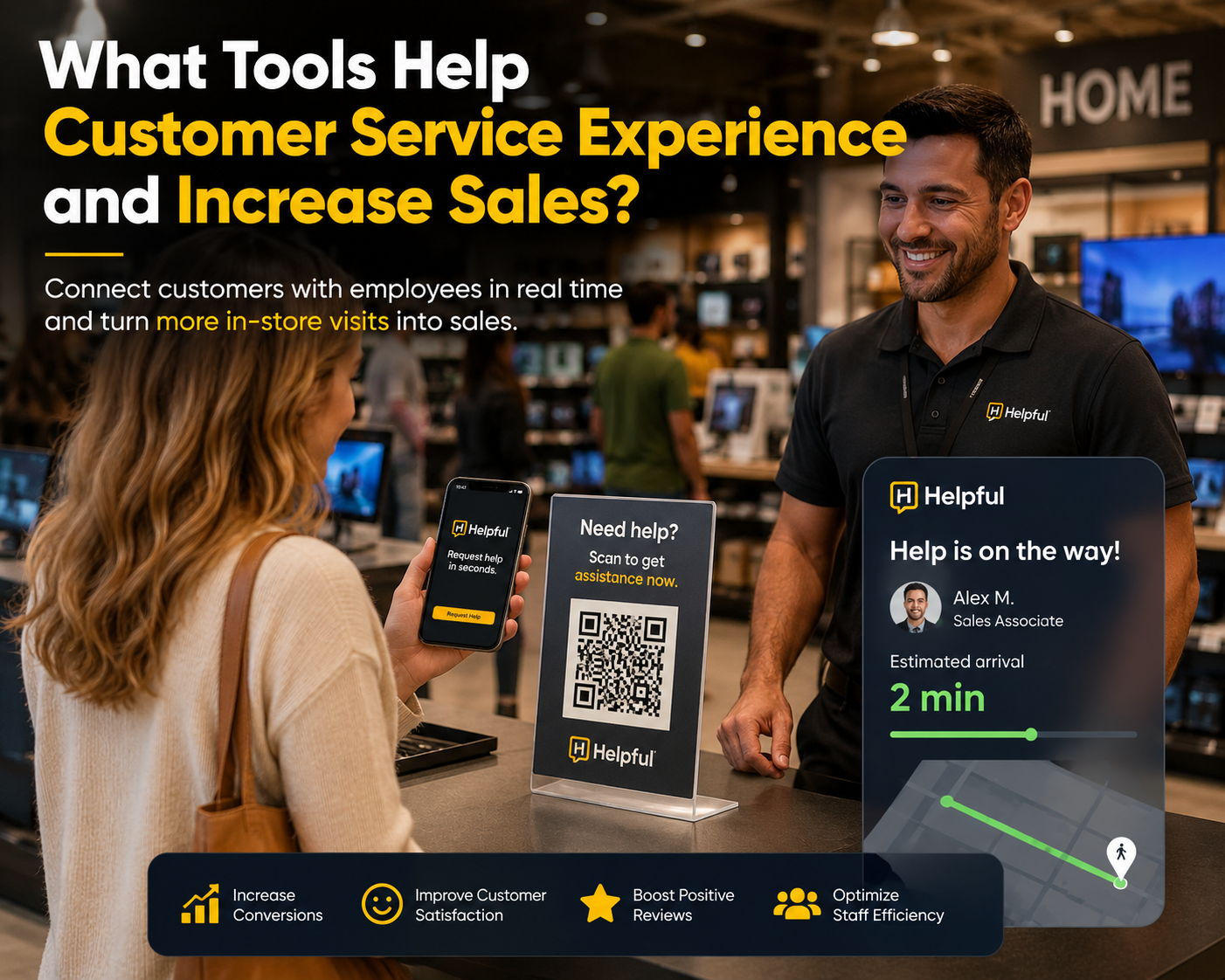
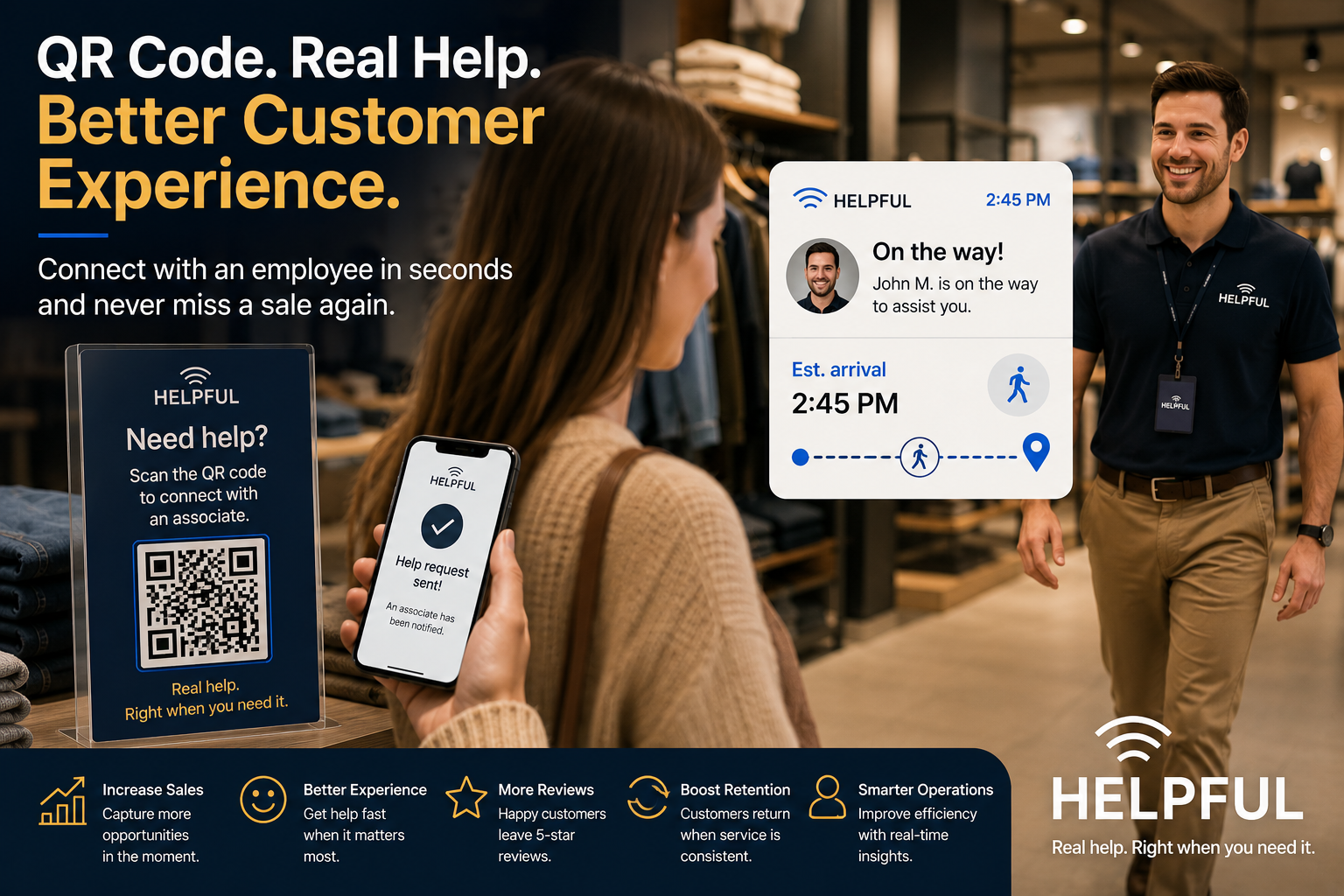
• Customers scan a QR code to request assistance
• Employees receive the request instantly
• Customers see a real-time ETA for help arrival
• Support happens exactly when needed
No searching.
No uncertainty.
No missed moments.
Helpful creates a systemized customer service experience that improves consistency, speed, and sales performance.
What Helpful Improves
Helpful helps businesses improve:
• Customer satisfaction
• In-store conversions
• Employee efficiency
• Customer retention
• Online reviews
• Response times
• Revenue opportunities
Instead of relying on chance interactions, businesses create predictable customer support systems.
Benefits of Fixing Bad Customer Service Experience
When businesses reduce friction and improve real-time support, the results are immediate.
Benefits include:
• Faster customer decisions
• Higher conversion rates
• Better customer loyalty
• Stronger brand reputation
• More efficient staff usage
• Increased sales per visit
Customer experience becomes a growth strategy instead of a liability.
What Businesses Should Do Next
If you want to eliminate bad customer service experience, start here:
• Audit how customers currently request help
• Identify delays in employee response times
• Find moments where customers abandon decisions
• Reduce friction throughout the location
• Implement real-time customer support systems
The businesses that grow fastest are the ones that make buying easier.
Conclusion
Bad customer service experience is rarely caused by bad employees.
It is usually caused by slow systems, poor accessibility, and lack of real-time support.
Customers expect immediate help.
Businesses that remove friction and create instant access to assistance will outperform competitors in both customer satisfaction and revenue.
The faster customers get help, the faster businesses grow.
Book a Demo and See Helpful in Action
Helpful helps businesses improve customer service experience by connecting customers with employees instantly in real time.
See how Helpful reduces friction, improves conversions, and helps capture more sales opportunities inside your location.
👉 Schedule your demo today and start turning customer interactions into revenue.

Helpful –
Help is on the way!
Take your in-person customer service and sales to the next level by putting the power of help in your customers hands. Let’s chat about how Helpful can boost your business!



.svg)
.svg)
.svg)


