
What Are Examples of Customer Service Experience That Increase Sales?

Most businesses lose sales long before a customer reaches checkout.
The problem usually happens in the middle of the buying journey when customers need help but cannot find it.
A shopper has a question.
An employee is unavailable.
The customer waits, hesitates, and leaves.
This is where the customer service experience either builds confidence or destroys conversions.
Understanding what are examples of customer service experience helps businesses identify the exact moments where revenue is won or lost inside physical locations.
What Are Examples of Customer Service Experience?
Customer service experience refers to every interaction a customer has with your business while trying to get assistance, make a decision, or complete a purchase.
In retail and service environments, these experiences happen in real time.
Examples of customer service experience include:
• Quickly connecting a customer with an employee
• Answering product questions immediately
• Helping customers compare products
• Providing fast assistance during checkout
• Giving customers clear directions or recommendations
• Updating customers when help is on the way
• Making support easy to access without waiting
Strong customer service experiences reduce friction.
Poor experiences create delays, uncertainty, and abandoned purchases.
Why Customer Service Experiences Often Fail
Most businesses assume customer service is working because employees are physically present.
But customers care about accessibility, not visibility.
The breakdown usually happens because:
• Employees are already helping other customers
• Customers do not know where to go for help
• Teams are spread too thin across the floor
• Customers avoid interrupting busy staff
• There is no instant way to request assistance
As a result, customers stop asking for help altogether.
And when questions go unanswered, sales opportunities disappear.
The Hidden Cost of Poor Customer Service
Poor customer service experiences affect more than satisfaction scores.
They directly impact revenue.
Businesses often experience:
• Lower in-store conversion rates
• Reduced customer retention
• Negative online reviews
• Lost high-intent buyers
• Lower average order values
• Increased customer frustration
Most companies focus heavily on marketing and traffic generation.
But traffic means very little if customers cannot get help when they are ready to buy.
Real-Time Assistance Creates Better Customer Experiences
The best examples of customer service experience all have one thing in common:
Customers receive help quickly and without friction.
When support is immediate:
• Customers feel confident
• Buying decisions happen faster
• Abandonment decreases
• Sales conversions improve
• Customer satisfaction increases
Modern customer service is no longer just about friendliness.
It is about reducing delays between customer intent and employee response.
Introducing Helpful: Real-Time Employee Access for Customers
Helpful was built to improve customer service experiences inside physical locations.
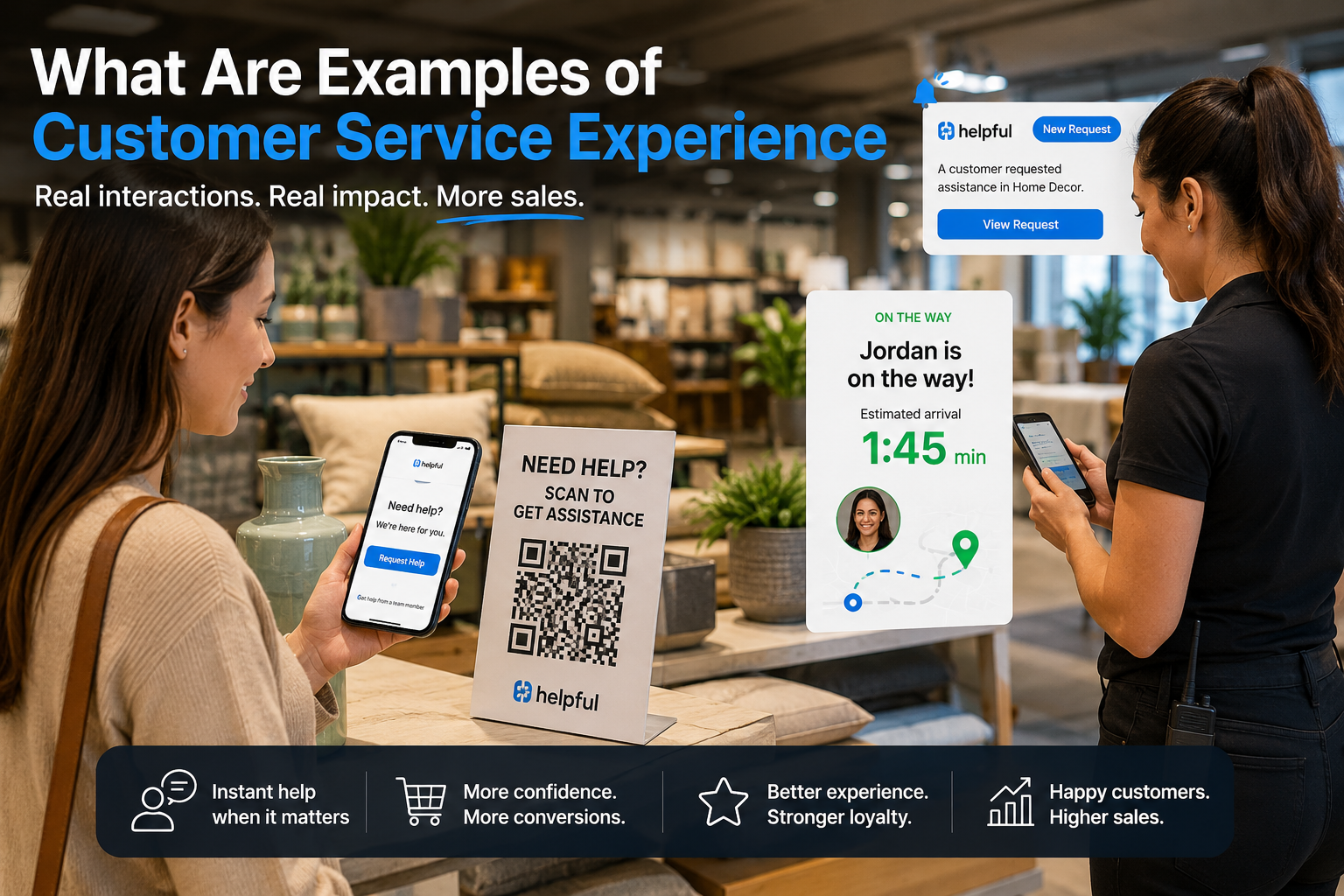
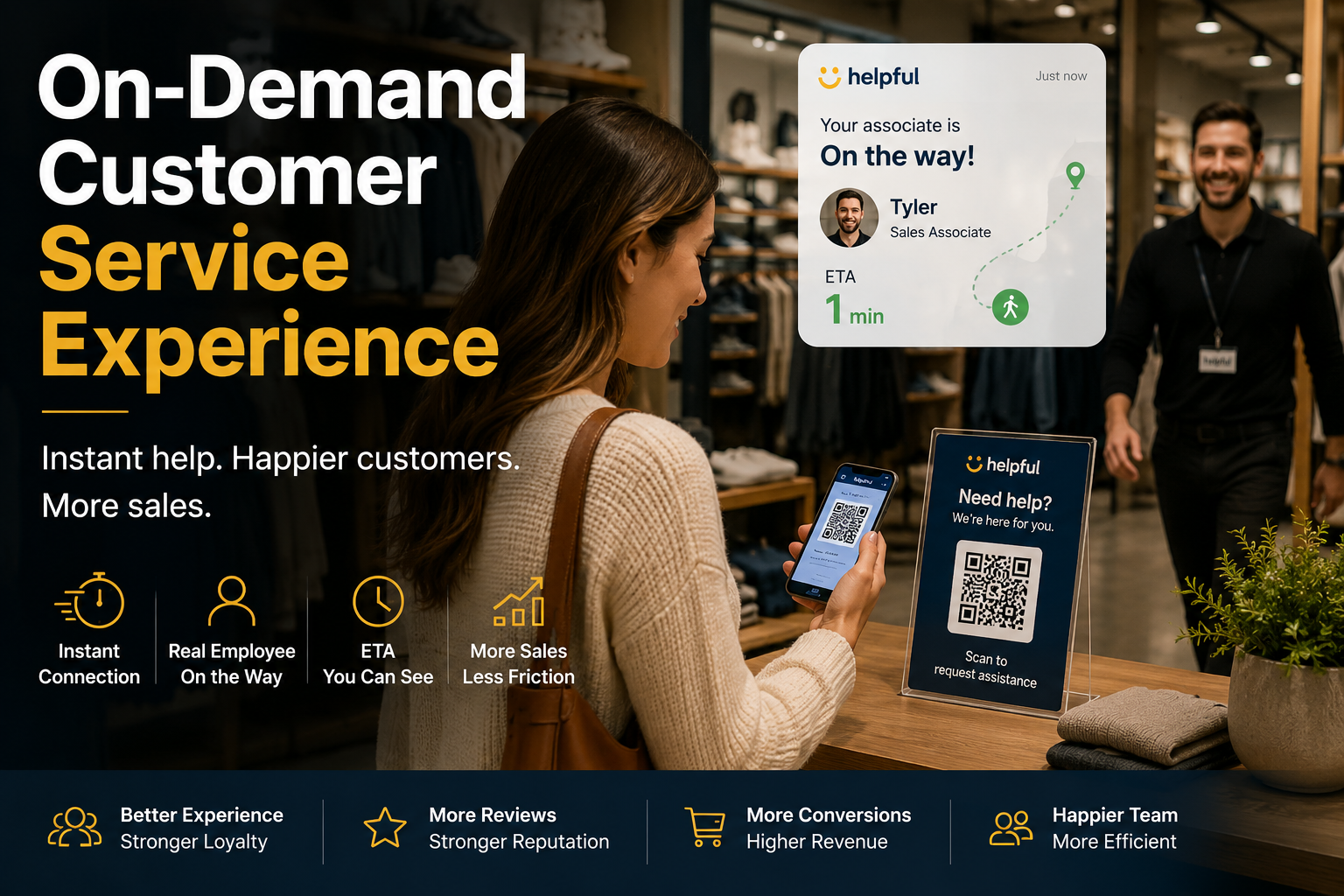
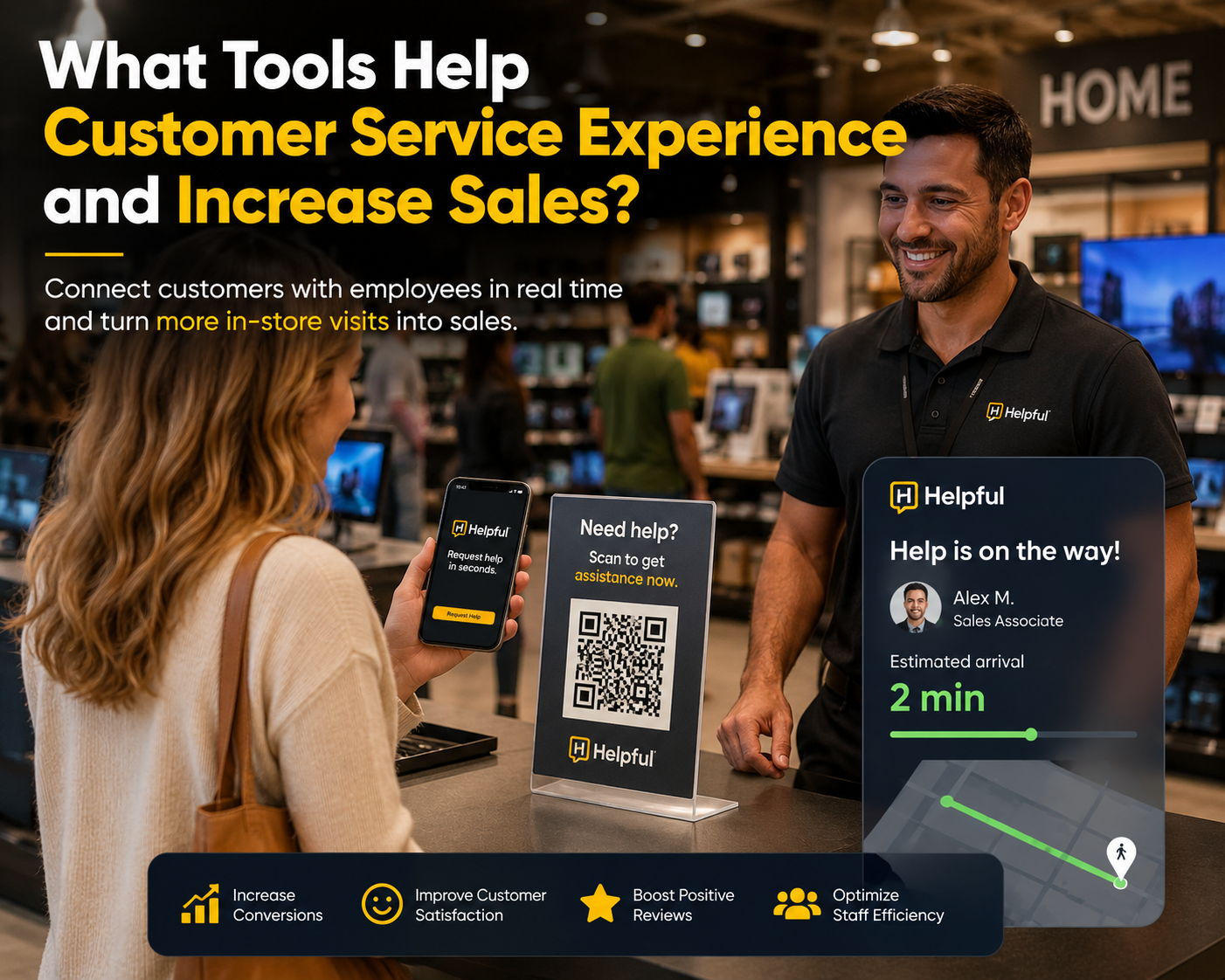
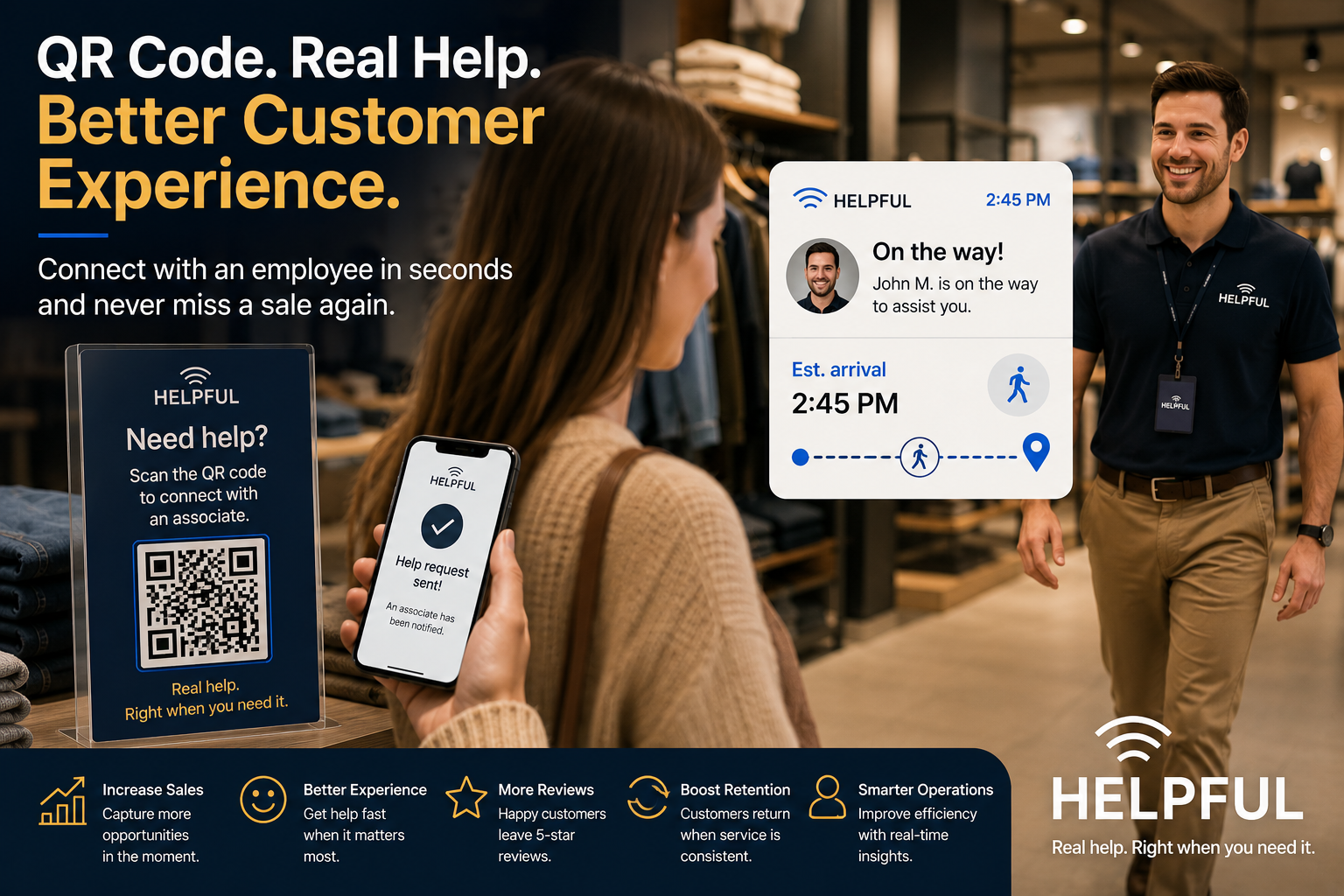
Instead of forcing customers to search for employees, Helpful creates an instant connection between shoppers and staff.
Here’s how it works:
• Customers scan a QR code with their phone
• They request help instantly
• Employees receive the request in real time
• Customers see an estimated arrival time
• Assistance arrives exactly when needed
No searching.
No waiting.
No missed sales opportunities.
Helpful helps businesses create faster, more consistent customer service experiences that improve both revenue and customer satisfaction.
What Helpful Improves
Helpful helps businesses improve key operational and customer experience metrics, including:
• Faster customer response times
• Higher in-store conversion rates
• Improved customer retention
• Better online reviews
• Reduced sales abandonment
• Increased employee efficiency
• More consistent customer interactions
Instead of relying on chance, businesses create a repeatable system for delivering help at the moment customers need it most.
Benefits of Better Customer Service Experiences
Businesses that improve customer service experiences often see immediate results.
These benefits include:
• Increased sales conversions
• Higher customer satisfaction
• Faster decision-making
• Better employee productivity
• Stronger customer loyalty
• Improved brand reputation
The businesses growing fastest today are the ones making support easier, faster, and more accessible.
How Businesses Can Improve Customer Service Experiences
If your business wants to improve customer service experiences, start by identifying where customers experience delays or friction.
Focus on:
• How customers currently request help
• Where support delays happen
• How quickly employees respond
• Whether customers can easily access assistance
• Systems that reduce waiting and confusion
The goal is simple:
Remove friction from the buying process.
Conclusion
Understanding what are examples of customer service experience helps businesses see where customer interactions either drive revenue or lose it.
Customers expect immediate support, easy access to employees, and frictionless experiences.
Businesses that improve response times and accessibility create stronger customer relationships and higher conversion rates.
When customers can get help exactly when they need it, satisfaction increases and sales follow.
Book a Demo and See Helpful in Action
Helpful helps businesses improve customer service experiences by connecting customers with employees instantly in real time.
If you want to reduce lost sales, improve customer satisfaction, and create more consistent customer interactions, Helpful provides the system to make it happen.
👉 Schedule your demo today and start turning visitors into buyers.
Helpful –
Help is on the way!
Take your in-person customer service and sales to the next level by putting the power of help in your customers hands. Let’s chat about how Helpful can boost your business!



.svg)
.svg)
.svg)


