
Gaps in Customer Service Experience in Stores That Cost Sales


How to Identify Gaps in Customer Service Experience in Stores and Increase Sales
Introduction
Most retailers focus on getting more people through the door.
But traffic isn't the problem.
The real issue is what happens after customers enter your store.
Many businesses have hidden gaps in customer service experience that create friction, delay decisions, and drive customers away before they buy.
Customers arrive ready to make a purchase, but when they can't get help at the right moment, confidence drops and sales disappear.
The businesses that recognize and eliminate these service gaps are the ones that consistently outperform competitors.
What Are Gaps in Customer Service Experience?
Customer service gaps are moments where customer expectations and actual service delivery don't align.
In a physical store, these gaps happen when customers need assistance but cannot easily access it.
Examples include:
- Waiting too long for help
- Not knowing who to ask
- Employees being unavailable
- Receiving inconsistent information
- Feeling ignored during the buying process
- Every gap creates friction.
- And friction creates lost revenue.
Why Customer Service Gaps Happen in Stores
Most service gaps are not caused by poor employees.
They're caused by broken systems.
Limited Staff Availability
Employees are often helping other customers, stocking shelves, handling transactions, or managing multiple responsibilities at once.
Even great employees cannot be everywhere simultaneously.
Poor Timing
Customer questions happen at unpredictable moments.
If assistance isn't available when the question arises, customers often move on without purchasing.
Lack of a Service Request System
Many stores rely on customers physically searching for help.
This creates uncertainty and frustration.
Customers shouldn't have to hunt for assistance when they're ready to buy.
Inconsistent Service Delivery
Different employees provide different levels of service.
Without a system, the customer experience becomes unpredictable.
The Hidden Cost of Customer Service Gaps
Most businesses underestimate the financial impact of service failures.
Common consequences include:
- Lost sales opportunities
- Increased shopping cart abandonment in-store
- Lower customer satisfaction
- Reduced customer retention
- Negative online reviews
- Lower average transaction values
The biggest challenge is that these losses often go unnoticed.
Customers rarely tell you why they left.
They simply leave.
Why Real-Time Help Is Becoming Essential
Modern customers expect immediate access to information and assistance.
They can get answers instantly online.
They now expect similar responsiveness inside physical locations.
The most successful retailers are removing barriers between customers and employees.
When customers can access help immediately:
- Buying decisions happen faster
- Confidence increases
- Frustration decreases
- Conversion rates improve
Speed and accessibility have become competitive advantages.
Introducing Helpful
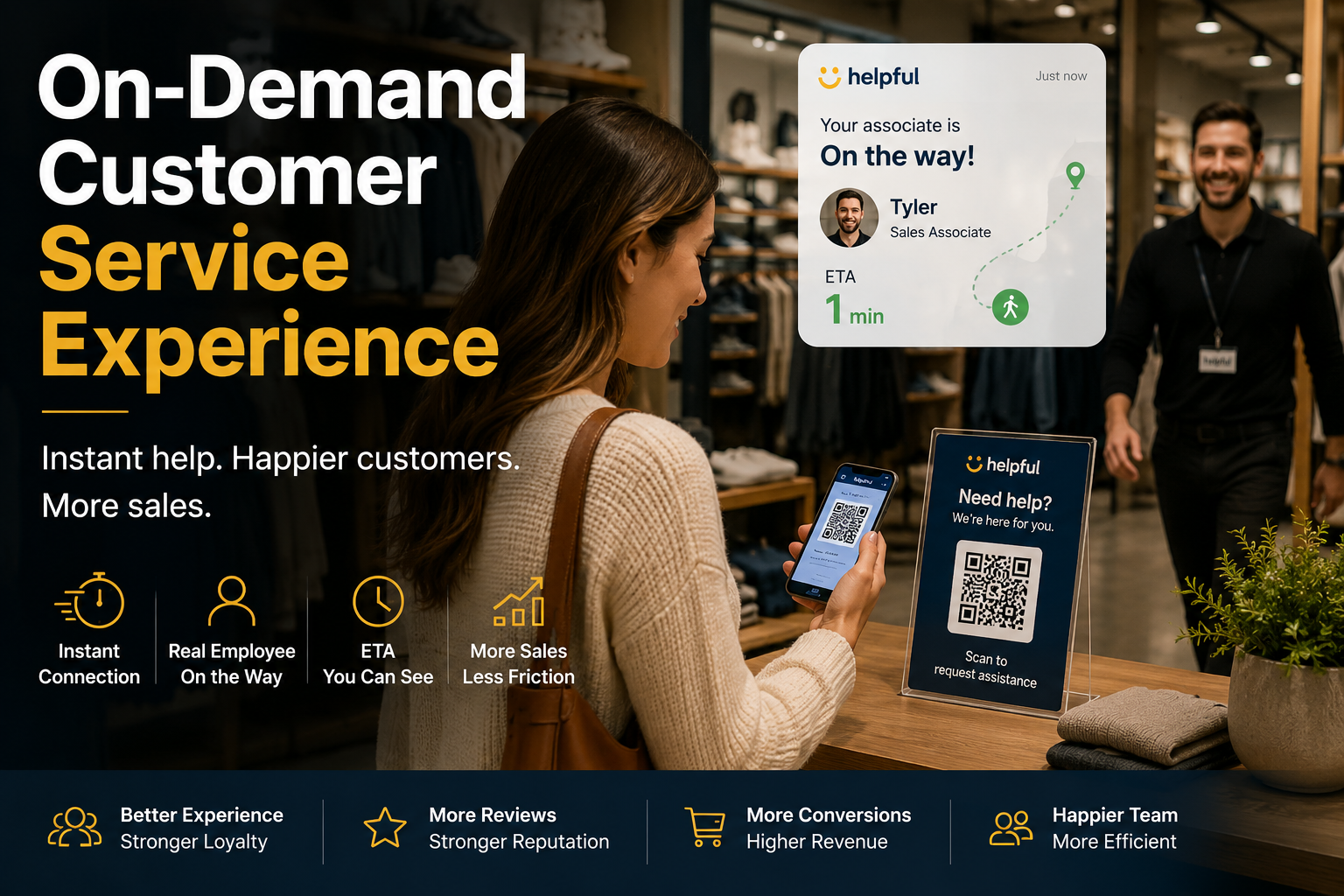
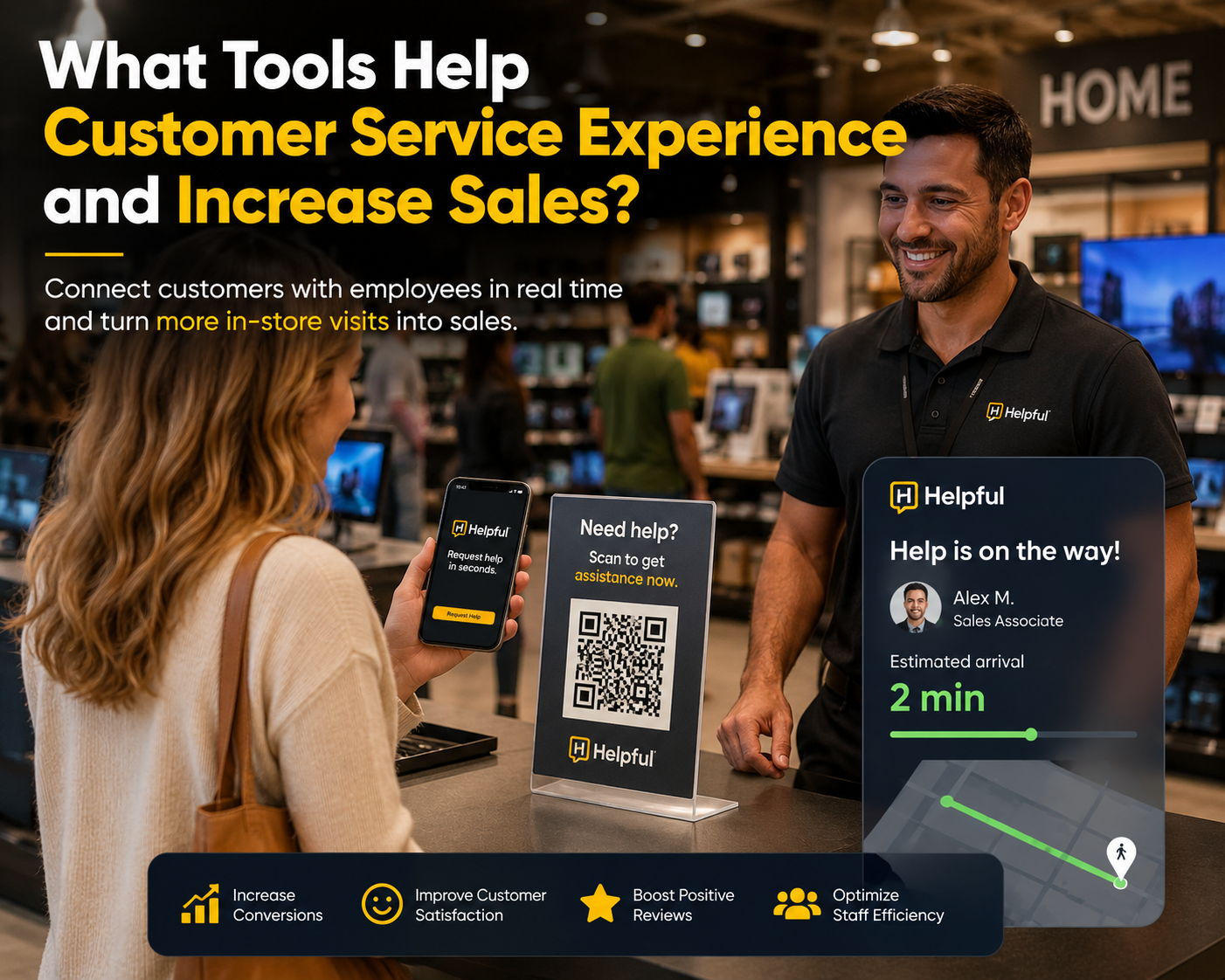
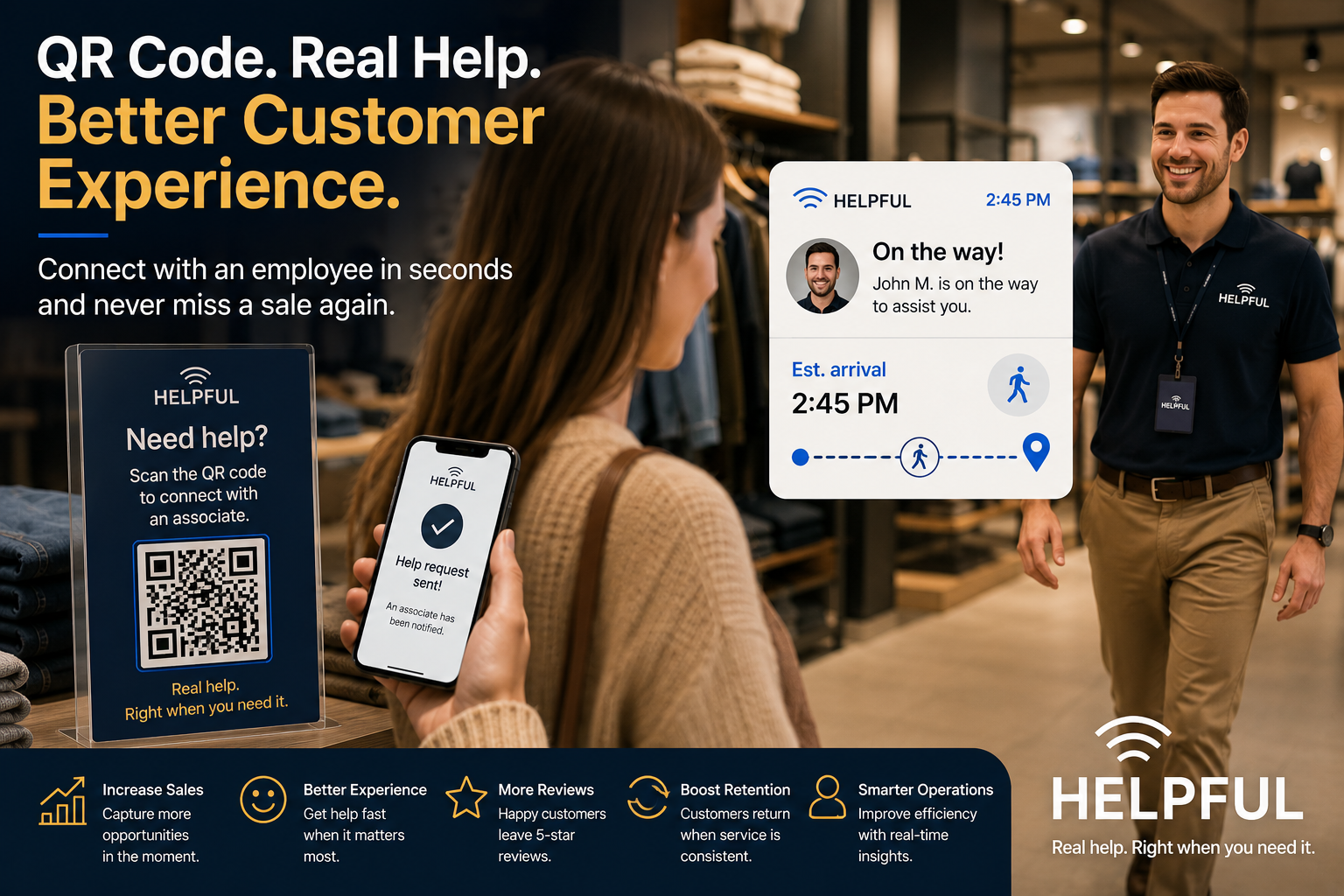
Helpful was built to eliminate gaps in customer service experience inside physical locations.
Instead of relying on customers to find employees, Helpful creates a direct connection between customers and staff in real time.
How Helpful Works
- Customers scan a QR code using their phone
- They request assistance instantly
- Employees receive the request immediately
- Customers see a real-time ETA for help arrival
- Staff can respond faster and more efficiently
This removes uncertainty and creates a smoother customer journey.
Customers know help is on the way.
Employees know exactly where they're needed.
What Helpful Improves
Helpful helps businesses improve key performance areas including:
Customer Experience
Customers receive support when they need it most.
Customer Retention
Positive experiences encourage repeat visits.
Online Reviews
Faster service leads to stronger customer satisfaction and better reviews.
Sales Performance
More questions get answered, resulting in more completed purchases.
Operational Efficiency
Employees spend less time searching for customers and more time helping them.
Benefits of Closing Customer Service Gaps
Businesses that remove service friction often experience:
- Higher conversion rates
- Increased customer satisfaction
- Better employee productivity
- Stronger customer loyalty
- Improved brand reputation
- More revenue from existing traffic
Instead of investing solely in attracting more customers, businesses maximize the value of the customers already walking through the door.
What To Do Next
If you want to eliminate customer service gaps in your store:
- Audit the customer journey
- Identify moments where customers struggle to get help
- Measure response times
- Look for areas of service friction
- Implement a real-time assistance solution
The goal is simple.
Make it easier for customers to get answers and make buying decisions.
Conclusion
Gaps in customer service experience are often invisible, but their impact is significant.
Every delayed interaction, unanswered question, and missed opportunity can result in lost revenue.
The most successful businesses aren't necessarily the ones with the largest teams.
They're the ones with systems that connect customers to help at the exact moment they need it.
When you eliminate service gaps, you improve the customer experience, increase conversions, and create a more profitable operation.
Book a Demo and See Helpful in Action
Helpful helps businesses close customer service gaps, improve customer experiences, and capture more in-store sales opportunities.
See how real-time employee assistance can transform your location and help convert more visitors into buyers.
👉 Schedule your demo today and start turning customer questions into completed sales.
Helpful –
Help is on the way!
Take your in-person customer service and sales to the next level by putting the power of help in your customers hands. Let’s chat about how Helpful can boost your business!



.svg)
.svg)
.svg)


